Becoming a Learning First Leader
Ask any principal what their job is, and most will tell you some version of the same answer: to support teachers and help students succeed. But knowing that and actually building the systems to make it happen consistently — for every student, in every classroom, every day — are two very different things. That gap is exactly what the Learning 1st Framework is designed to close.
What Does It Mean to Be a Learning 1st Leader?
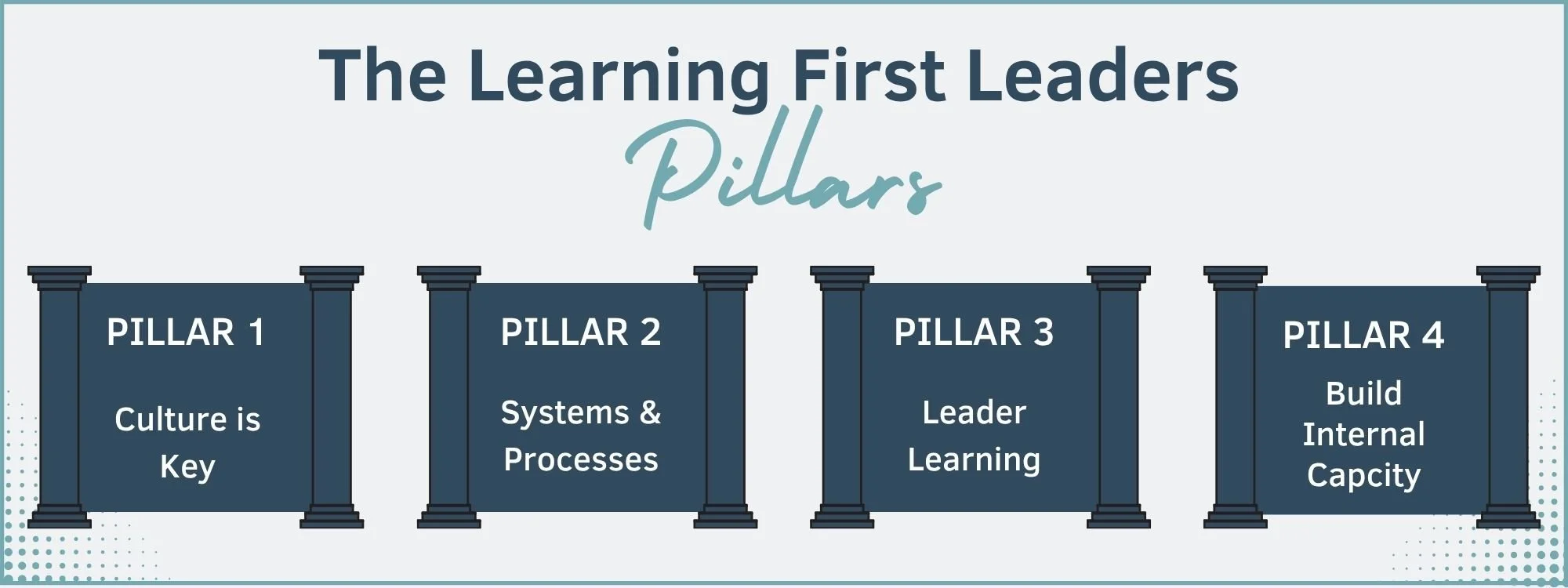
Being a Learning 1st Leader is not a title — it's a daily practice built on four pillars: Culture is Key, Systems & Processes, Leader Learning, and Build Internal Capacity. None of these pillars stands alone. A thriving culture without viable systems produces warm schools with flat achievement. Tight curriculum systems without relational culture produce compliance without commitment. Learning 1st leaders build a bridge between both.
Culture Is Not a Poster on the Wall

Dr. John Hattie's research gives collective teacher efficacy an effect size of 1.57 — the highest of any school-based factor. That number only becomes real when leaders move beyond laminated mission statements and create cultures where every staff member understands and lives the mission daily. The practical tool for this? Unpacking your mission into collective commitments. Take each key phrase and ask: what does this look like in practice? What is the evidence that we're living it? Those answers become your observable, non-negotiable commitments — and the lens through which you conduct instructional walkthroughs.
Systems That Guarantee the Curriculum
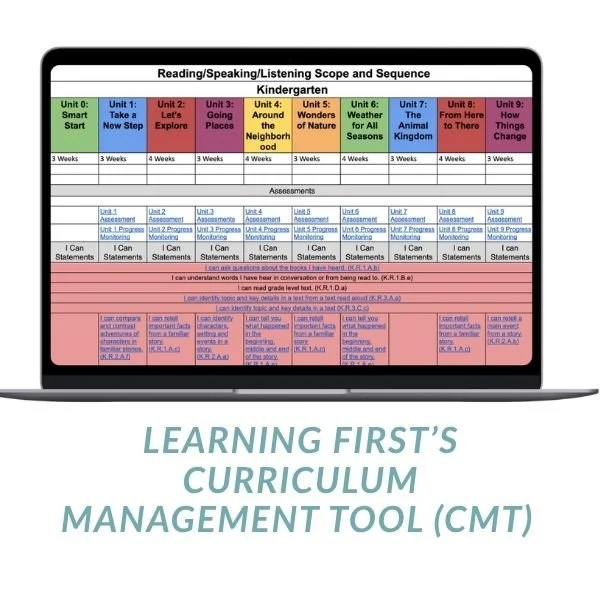
Robert Marzano identified a guaranteed and viable curriculum as the single most powerful school-level factor in student achievement. Yet in school after school, what gets taught varies by teacher, by hallway, by year. Strong pacing guides solve this by mapping when standards are taught and assessed — not just which ones. Pairing pacing guides with Missouri's instructional testlets and MO LEAP Blocks gives teachers high-quality, standards-aligned questions they can use formatively throughout the year. When leaders design instruction backwards from the assessment, they clarify the standard, the rigor, the question type, and the instruction — all at once.
Walkthroughs as the Bridge Between Culture and Systems
Instructional walkthroughs are only powerful when they're grounded in shared commitments. When your collective commitments are clear — learning targets posted, academic language in use, small group instruction happening — walkthroughs stop being about evaluating individuals and start being about gathering evidence of your mission in action. Feedback should follow a simple, growth-oriented cycle: continue and compliment, clarify and question, suggest and shift, implement and follow up. The follow-up is where accountability lives.
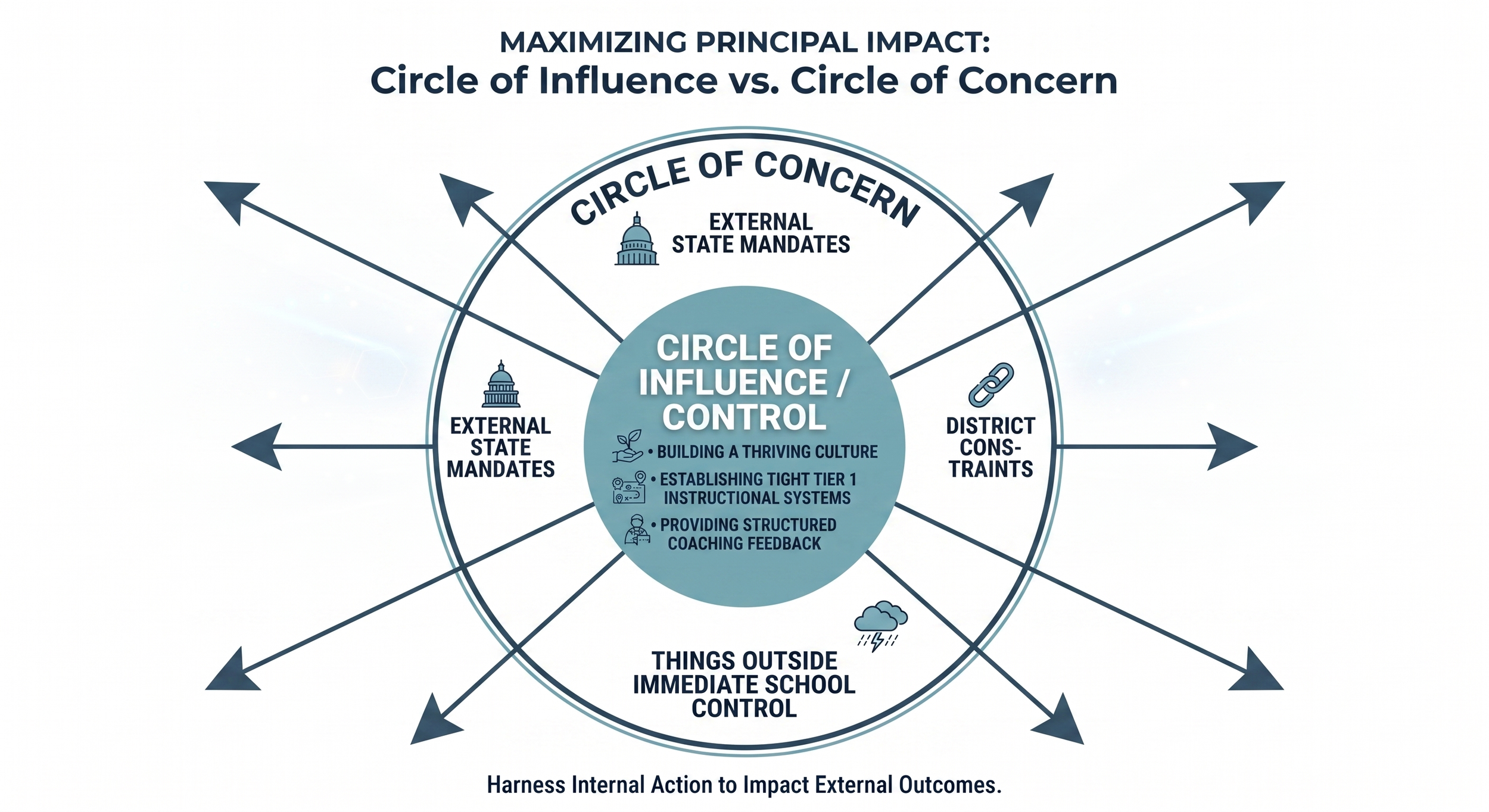
The barriers to instructional leadership are real — time, competing priorities, the weight of a thousand urgent tasks. But Stephen Covey's Circle of Influence reminds us: we can't lead from the Circle of Concern. We lead from what we can control. Building the culture, the systems, and the coaching structures that make excellence inevitable rather than accidental — that is what it means to be a Learning 1st Principal.
Shauna Stephanchick is the President and Founder of STEP UP Consulting Services and Learning 1st Schools