The Problem with Proficiency Scales
Most schools have proficiency scales. Most of them aren't working the way we think they are.
Robert Marzano's research on proficiency scales is compelling — when implemented well, they can produce significant gains in student learning. The concept is sound. The implementation? That's where we have a problem.
Here's what I see in schools across the country:
Teachers are being asked to build proficiency scales under rushed, sometimes forced circumstances — with little training and limited understanding of how standards actually progress across grade levels. The product looks right on the surface. But it doesn't hold up.
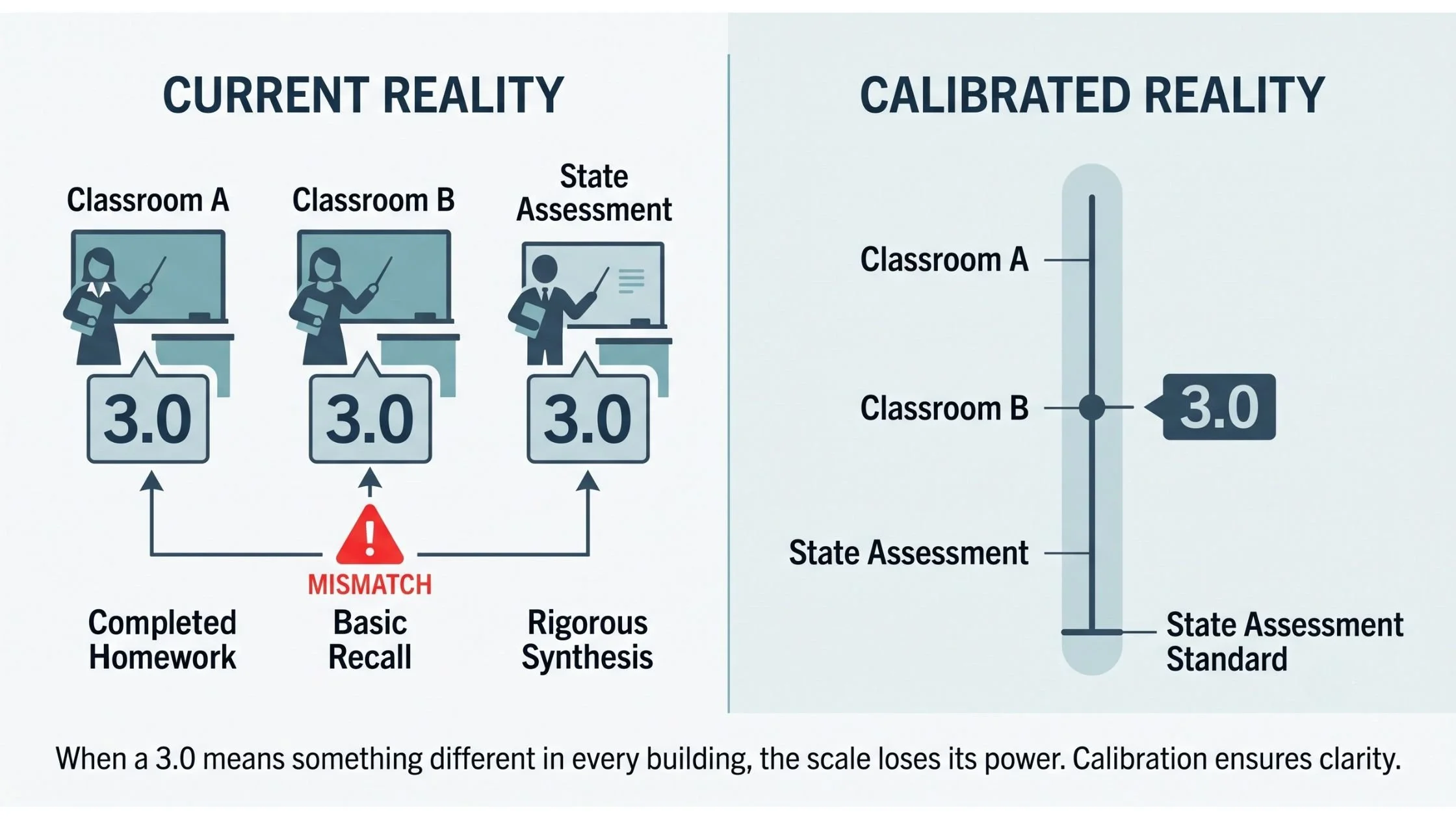
And here's the deeper issue nobody is talking about: when teachers create scales independently, there is almost no mechanism to ensure that a 3.0 in one classroom means the same thing as a 3.0 in the building across town — or on the state assessment students will eventually sit in front of.
I call this the proficiency alignment gap. And it's quietly undermining the very clarity we were trying to create.
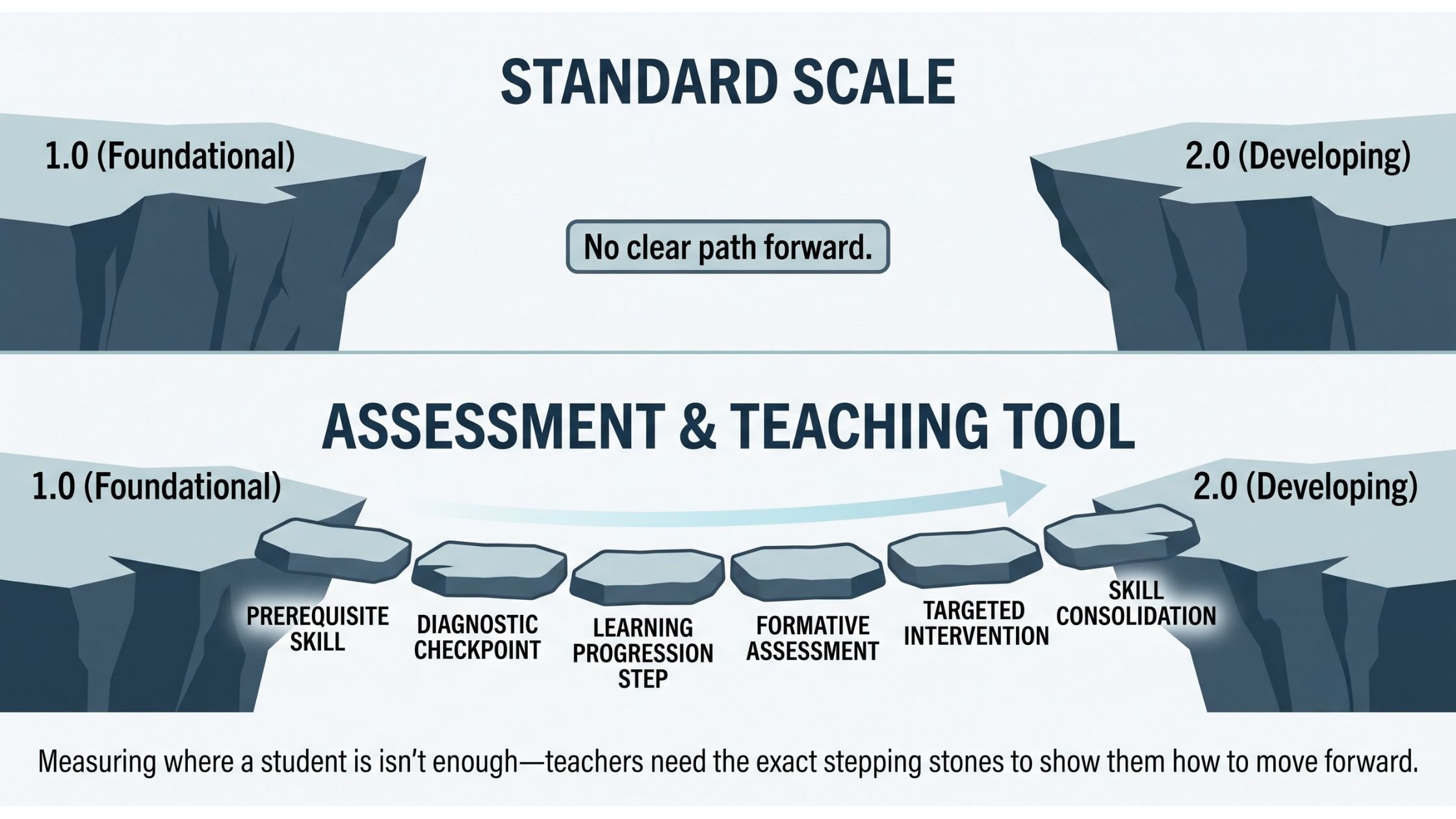
There's a third problem. The space between a 1.0 and a 2.0 on most scales is too thin to be instructionally useful. It tells a teacher where a student is. It doesn't tell them nearly enough about how to move them — what prerequisite skills are missing, what the learning progression looks like, what strategies to reach for.
For students who most need precise, targeted intervention, a proficiency scale as typically constructed is not enough.
So what's the solution?
I've been working with more than a third of Missouri's school districts for over 20 years, and I've come to believe this: if we truly want better proficiency for students, we may need to consider leaving proficiency scales behind.
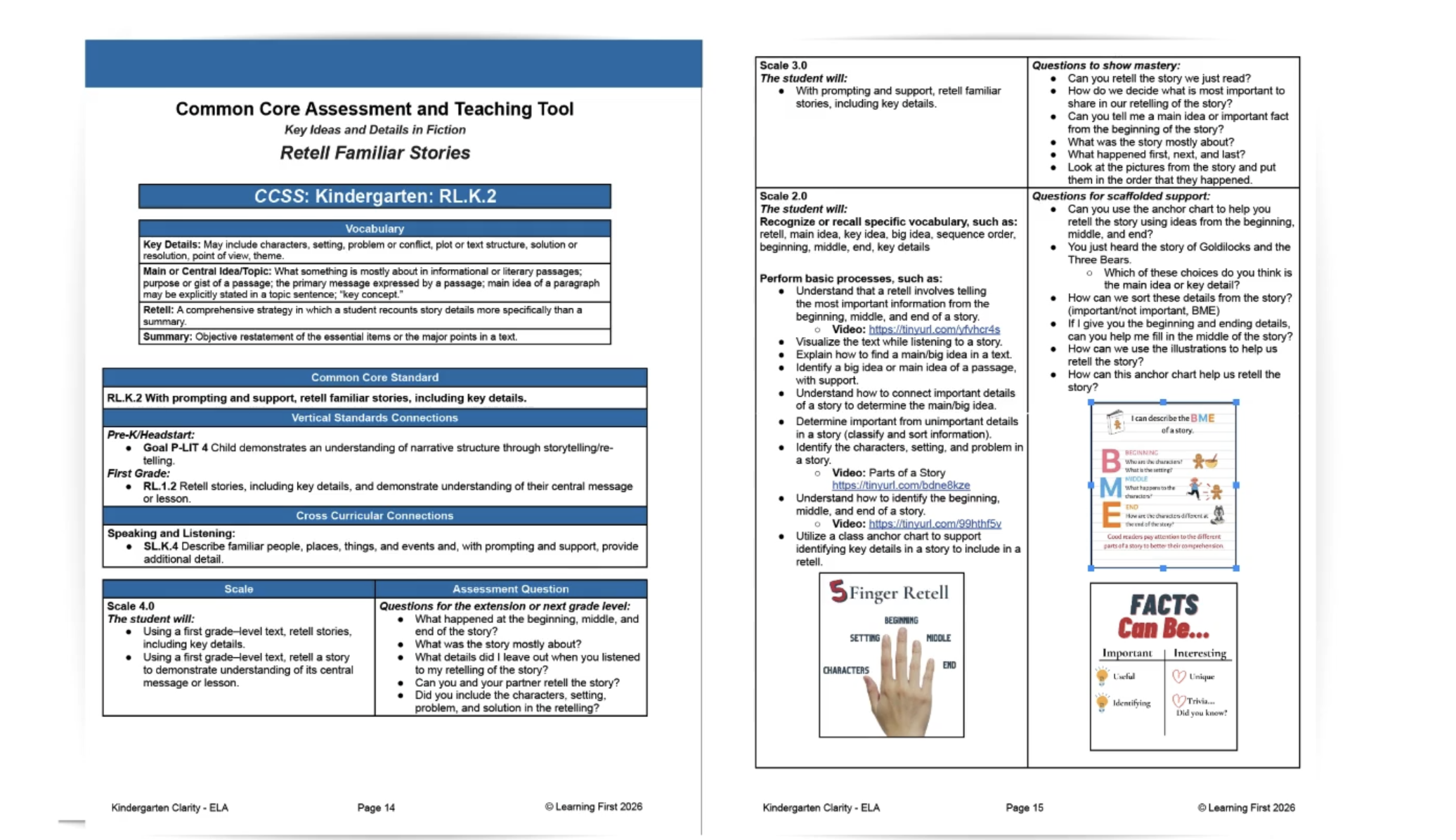
An example of the Assessment and Teaching Tool
What I'm proposing is a shift to Assessment and Teaching Tools — tools that calibrate proficiency explicitly to state assessment expectations, so a 3.0 means the same thing everywhere. Tools that build out the prerequisite skill progression below grade level so teachers know not just where a student is, but exactly how to move them.
The goal of proficiency scales was always clarity. It's time our tools actually delivered it.
What's your experience with proficiency scales in your school or district? I'd love to hear what's working — and what isn't.