"Learning First by STEP Up has been a great resource in clarifying the rigor of the Missouri state standards. We have seen growth in our student achievement data and increased teacher clarity."
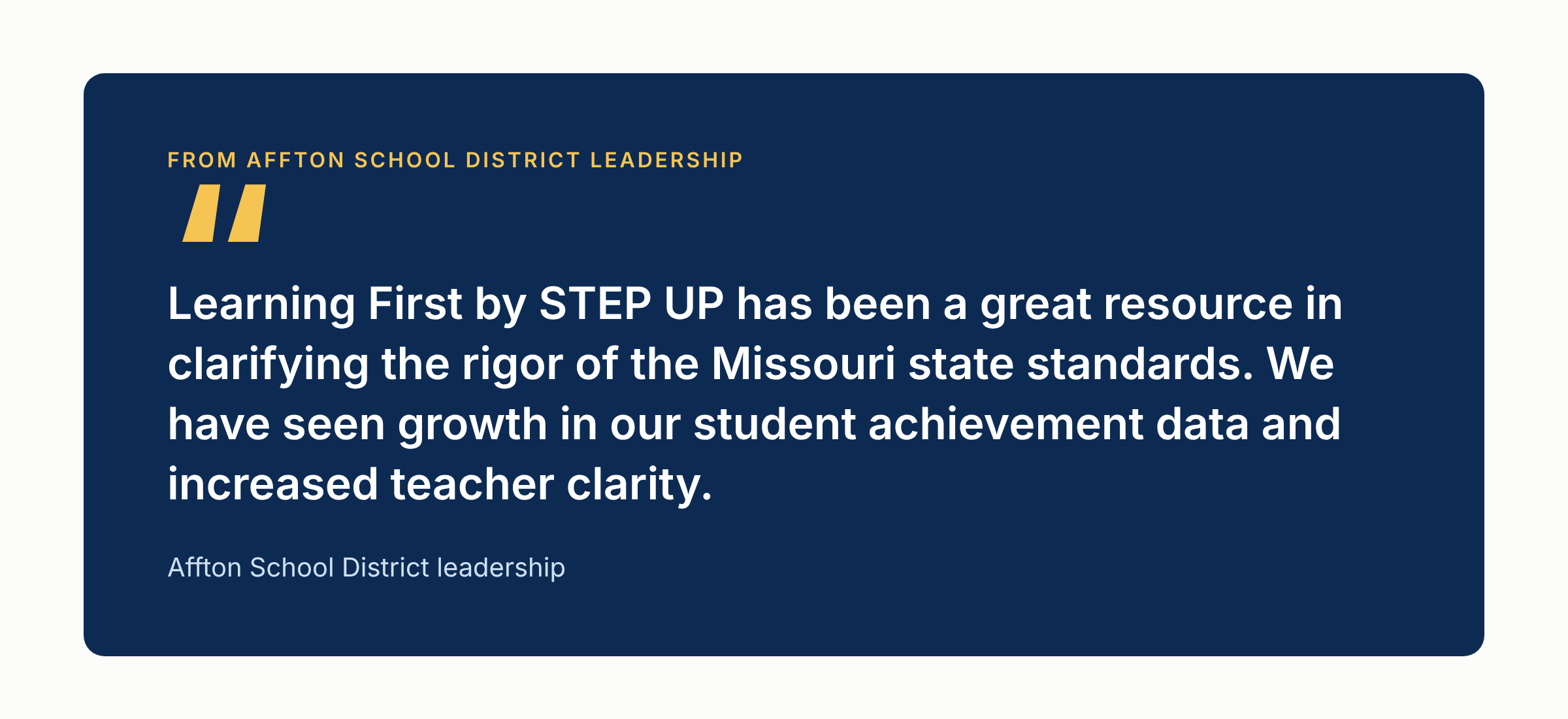
That's from the leadership team at Affton School District. And it's the question I hear most from leaders who read stories like theirs: Where do we start?
Our full framework has five steps, but most districts begin with the same three moves.
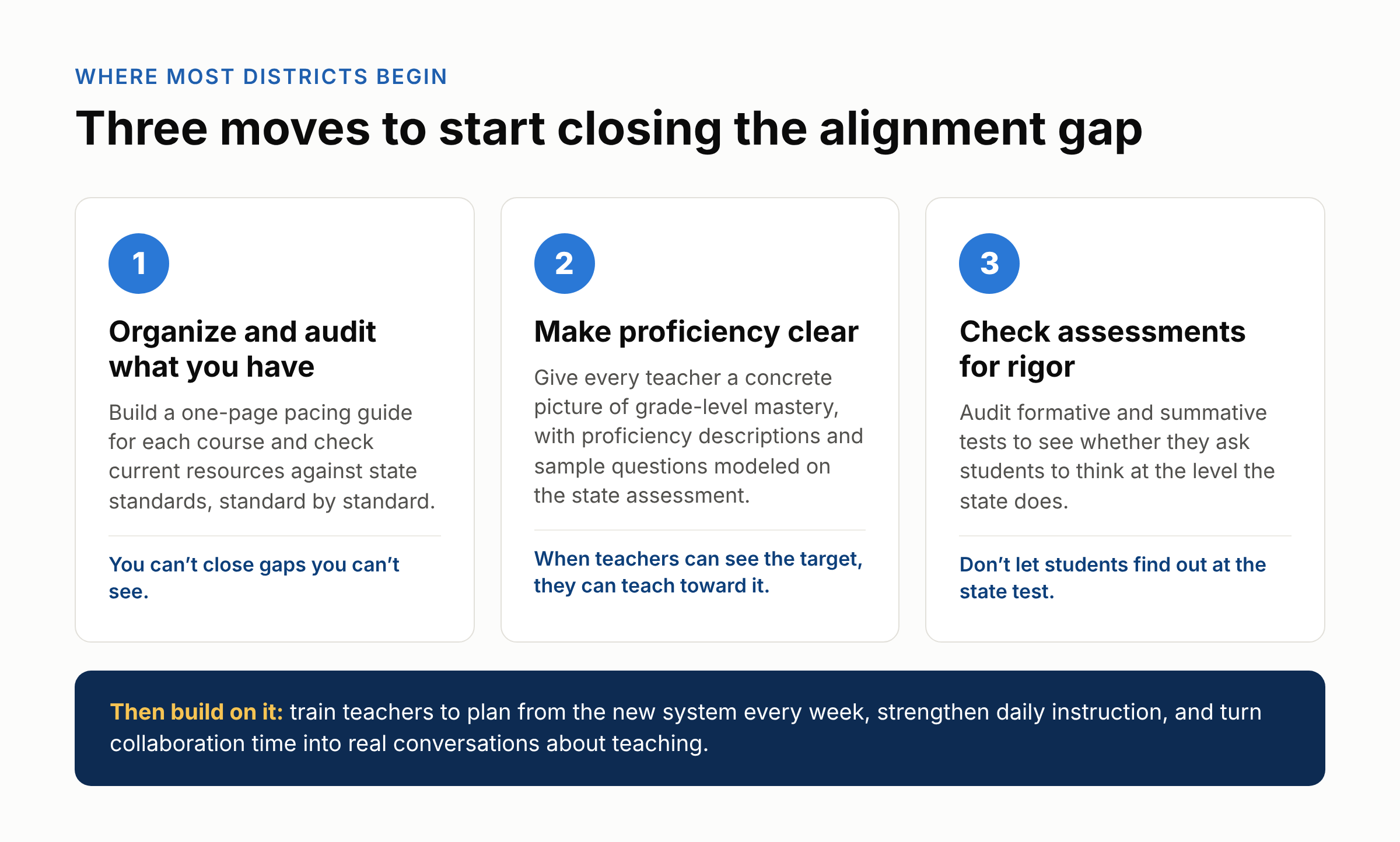
1. Organize and audit what you already have. Build a one-page pacing guide for each course and check your current resources against the state standards, standard by standard. Most districts find missing standards in the first session. You can't close gaps you can't see.
2. Make proficiency clear. Give every teacher a concrete picture of what grade-level mastery looks like, with proficiency descriptions and sample questions modeled on the state assessment. When teachers can see the target, they can teach toward it, and students can see it too.
3. Check your assessments for rigor. Audit your formative and summative tests to see whether they ask students to think at the level the state does. Many classroom tests stop short, and students don't find out until the state test.
From there, the remaining steps build on that foundation: training teachers to plan from the new system every week, strengthening daily instruction, and turning collaboration time into real conversations about teaching.
When districts replace scattered practices with a clear, aligned system, a lot changes at once. Teachers stop guessing. Burnout eases. And the kind of double-digit gains you've read about in this series start to feel possible, in scores, in accountability ratings, and in the confidence teachers bring to their classrooms every day.
The alignment gap is real. But it's closable. And it starts with seeing what's actually there.
Ready to take the first step? Schedule a conversation with our team. info@learningfirstschools.com