I Stood in That Room Wishing I Hadn’t Done the Training

I was asked recently to help a local district create proficiency scales.
I was hesitant. After years of doing this work, I've come to believe that providing a high-quality tool and teaching people great processes to use it is better than asking teachers to build from scratch. But I leaned in anyway. I wanted to be helpful.
The outcome was exactly what I feared.
It was late spring. The room was full of teachers who were already exhausted. They had tried building proficiency scales a few years back and some brought their old drafts. We went through the training steps. We began analyzing their previous work.
Every teacher in the room felt their scales weren't quality. Half the room was new to the district. They felt completely overwhelmed and lost.
I shifted into teacher mode — trying to figure out how to regain the culture of the room, how to keep people engaged, how to make this feel worthwhile. In an effort to show more support, I pulled out a sample Assessment and Teaching Tool and shared digital access to a scaffolded guide — just to show them what strong work looks like and help them in their writing.
That's when the questions started:
“If these are already created, why are we all here?”
“We don't know how to do this. This is hours of work.”
“These are so much stronger than anything we're going to create today.”
I said the typical words. I told them they know their students best. I stayed positive.
But standing in that room, I knew the truth. What they were creating wasn't aligned to state proficiency. It varied in quality from grade level to grade level. It was rushed. And if I had time to look deeply at every scale and give honest feedback — which I didn't — it was going to break them.
I stood there wishing I hadn't done the training. My fear was right.
We have to break the cycle.
We cannot keep asking teachers to do what we can already give them. Teachers are exhausted. Their time is precious. And the product of a rushed, under-supported scale creation session is not the high-quality tool students deserve.
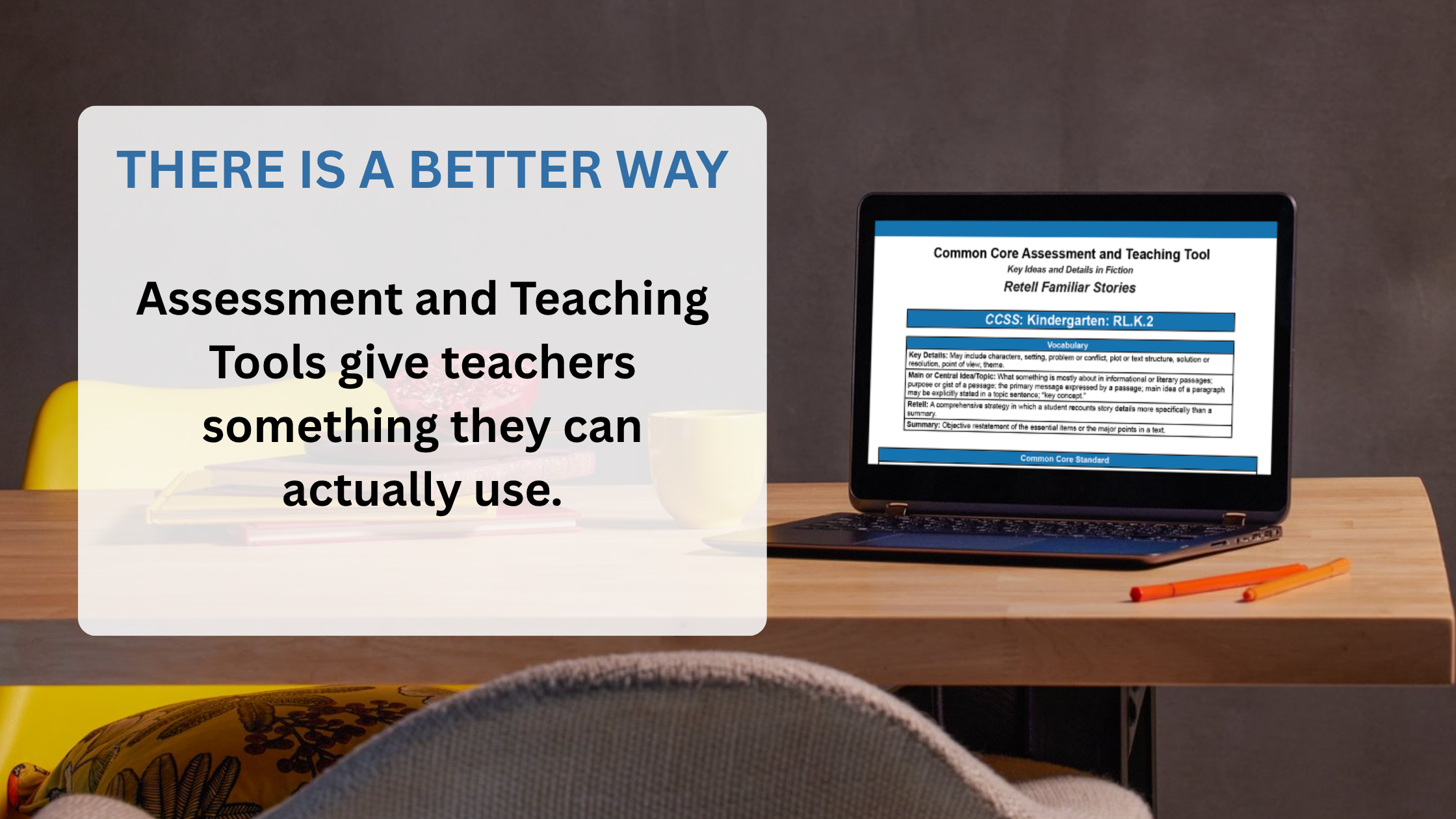
There is a better way. Assessment and Teaching Tools give teachers something they can actually use — tools already calibrated to state proficiency, already built with the prerequisite progressions that make intervention actionable, already at the quality level that moves student learning.
I share this story not to criticize the district or the teachers in that room. Every single one of them was trying. I share it because I think a lot of people have stood where I stood that day — in a room full of exhausted educators, watching good intentions produce a product that won't do what we need it to do — and felt exactly what I felt.
We can do better for our teachers. And when we do better for our teachers, we do better for students.
Want to see what an Assessment and Teaching Tool actually looks like?